Friday, February 3, 2012

Friday Bug: Ice Boatmen

April gathering of the Water Boatpeople

Bugs in the family Corixidae are called Water Boatmen and they are nice bugs, or at least won’t bite you as many water bugs are wont to do. Instead they row through the water collecting algae, small invertebrates, and fine organic material. In another sense, though, corixids are annoying: they are the most diverse water bug family in Alberta, but also the most difficult to identify to genus and species.
Sun + dark bodies = melt
 Most Water Boatmen (and Boatwomen) overwinter as adults and mate in the spring. Here in Alberta you can find clusters of them melting out of lake ice in late spring (these shots are from April). Their dark bodies warm and melt the ice around them, presumably giving them an advantage in finding the first mates. These bugs have been to BugGuide, but are still unidentified beyond family. A tough, but interesting group.

Friday, January 27, 2012

Friday Bug: Cosmopepla and Stachys

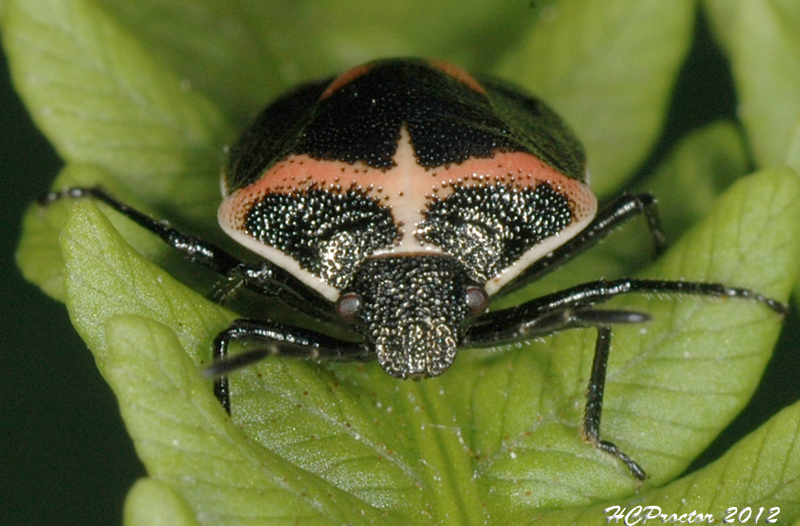
Two Twice-stabbed Stinkbugs do their thing on a bed of Hairy Hedgenettle
Bug blogging is fun, but also a chore that I find hard to keep near the top of the list of things to do. A major reason for that is my tendency for prolixity and another is that once I start a post I tend to get interested, dig deeper, and blather on. I guess those two reasons are actually one and the same and the solution obvious: a day with only short, simple posts. Here's a bug: isn't it pretty (not a question).
More 2-stab bugs with flowers
 So, here’s my new attempt to increase my productivity but reduce my prolixity: Friday Bug. First up is the Twice-Stabbed (i.e. two blood-red spots) Stinkbug now correctly known as Cosmopepla lintneriana Kirkaldy, 1909 (but with one of those long and complex nomenclatorial histories that I tend to run on about – short story: it was once Cimex carnifex Fabricius, 1798, then Pentatoma bimaculata Thomas,1865; and later and best , but wrongly, known as Cosmopepla bimaculata (Thomas, 1865)).
Twice-stabbed is a point of view
One of the interesting things about the Twice-Stabbed Stinkbug is that it seems to prefer to mix sex with flowers and so one has the opportunity to obtain colourful images. One can even find aggregations of butt-to-butt bugs on flowers; perhaps, as a result of males emitting a chemical scent that attracts females (and perhaps other competing males).
Bugs with purving crane fly
 Additionally, of course, stinkbugs are interesting because they stink. Krall et al. (1999) can tell you all about the chemical composition of the stink glands (aka metathoracic glands). More interestingly, they observed bugs have a good deal of control over their metathoracic glands and can shoot off one or the other or both if they so desire. Also, they nicely demonstrate that birds and a lizard are repulsed by bugs with full stink glands (but not with depleted glands).
Pasque flower seeds spark bug passion
Apparently, Ted MacRae’s cat likes to eat Twice-stabbed Stinkers, but in general, the bright black and red colouration and stink gland chemicals probably act as warning and revulsion to visually orienting vertebrate predators.
Yes, I smell and taste bad: Beware!
On a final fine note, the Twice-Stabbed Stinkbug has actually been studied in Alberta – and even better – the brief paper is now freely available.
Just hatched on a pea leaf - not a good sign
Only a few entomological journals are open access – Psyche and The Florida Entomologist come to mind. But the late, great Quaestiones Entomologicae has now joined these ranks thanks to the generosity of the many authors who have made their papers available under Creative Commons Attribution-Noncommercial-Share Alike 3.0 United States License and Kipling Will at the University of Califonria Berkeley who digitized the papers.
Twice-stabbed nymph in flower cluster
The Twice-Stabbed Stinkbug is a host generalist, but feeds almost entirely on seeds. So, finding them on your peas is not good, but on your garden flowers, not so bad. In Alberta, one preferred host is hedge nettle Stachys palustris. Well, that is what I thought anyway, but it isn’t only bug names that change. It seems former subspecies is now considered a distinct species by some: Stachys pilosa – Hairy Hedgenettle.
New & improved Stachys pilosa
In any case, except in New Jersey where a subspecies of S. pilosa is considered endangered, hedgenettle is doing fine and Twice-stabbed Stinkbug can’t be considered much of a pest. However, there is a crop species of hedgenettle – the Chinese Artichoke (aka Crosne, Chorogi) Stachys affinis.
Chinese Artichokes in Year III - a good crop for those who don't need to eat much
I’ve been trying to grow Chinese Artichoke for the last three years here in Alberta. The good news is that so far they have overwintered. The bad news is the tubers haven’t gotten very big (about half of marketable size) and the plants have never flowered. Our growing season is too short. On the other hand, no flowers = no seeds. So, Twice-stabbed Stinkbug will never be a pest and crosnes never a weed (they are naturalized in New York). Well, not a short and sweet post, but at least done and on Friday.
Crosne yield after 3 years (less nibbles)

References:

McDonald JD. 1968.  The life history of Cosmopepla (Thomas) (Heteroptera: Pentatomidae) in Alberta  Quaestiones Entomologicae 4 (2): 35-38.http://nature.berkeley.edu/%7Ekiplingw/QE%20documents%20for%20public/McDonald%201968%20QEv4n2%2035_38%20CC%20released.pdf

Krall BS; Bartelt RJ; Lewis CJ; et al. 1999. Chemical defense in the stink bug Cosmopepla bimaculata . Journal of Chemical Ecology 25 (11): 2477-2494   DOI: 10.1023/A:1020822107806
http://www.ars.usda.gov/research/publications/publications.htm?seq_no_115=100746

Sunday, January 15, 2012

Clivia Foodweb: Part II

Simple Food Chain: bulb - mite - mite
A few weeks ago I introduced the actors in the unfortunate demise of one of my favourite bulbs, a hybrid Clivia. Above is a simple food chain showing the relationships between the three most important species. Red arrows point to the consumer from the organism being consumed: what is eating what. The primary miscreant in this story is the Bulb Mite Rhizoglyphus robini Claparède, 1869. Bulb Mites are major pests of stored bulbs and of field crops such as onions. The predatory mite Gaeolaelaps aculeifer (Canestrini, 1884) is known to be an effective biological control agent. Well, the most abundant predatory mite in my Clivia pot turns out to be this same predator. So why did my bulbs still rot and die?
Bulb Mites don't eat just bulbs
Well, one reason is that Bulb Mites don't just eat bulb tissue. In fact, they would probably starve if all they had to feed on was healthy bulbs. Instead, they vector microbes that rot the bulbs and are attracted to small wounds on a bulb which they inoculate with disease causing microbes. Bulb Mites get most of their nutrition from these microbes. The bad (and opportunistic) microbes eat the bulbs. The predatory mites can do little to save a bulb that is already being eaten by microbes, but they may reduce the population of mites enough so that other healthy bulbs do not get infected.
A more representative food web
A second reason that the Predatory Mites may not have saved my Clivia is that they are not specialist predators on Bulb Mites. Gaeolaelaps aculeifer are very aggressive and will attack and eat any small arthropod or worm that they can overcome. The soil extracted from the Clivia pot had lots of tiny worms and tiny arthropods to distract the Predatory Mite from doing its job. Soil has many bacteria and fungi that live off of nutrients that leak out of roots or are present in humus and these microbes are necessary to healthy soil. These microbes are the primary foods of most of the small mites, springtails, and worms that live in pots with healthy plants.
Actors in the Clivia soil food web
Each of the three representations above of what is eating what have gotten more and more complex. The first is a simple food chain that represents the most important elements of the story if your primary interest is growing healthy bulbs. The first level of the chain is a primary producer (Clivia) that captures sunlight and makes plant matter. The second a primary consumer, the Bulb Mite. The third a secondary consumer, the Predatory Mite. Each of the next two representations of the feeding interactions adds more reality and complexity: a simple chain becomes more like a web of interactions. But the Clivia extractions had a dozen species of arthropods: 8 species of mites, 2 of springtails, and 2 of rove beetles.
A soil food web based on Clivia bulbs
This is the best that I can do to enumerate the feeding interactions in one pot of soil with a couple rotting Clivia bulbs. The good news is that except for the two species of bulb mites, the other animals are harmless or beneficial. The Rove Beetles are probably the top predators in this system - munching on all the smaller arthropods and worms. But I haven't found any papers that give details of their diets other than that Anotylus insecatus is known too feed on bulb maggots. Besides, if I had to draw in arrows linking the Rove Beetles to their probable prey, then things would really get messy. But, that's the way Nature operates.

Sunday, January 8, 2012

What’s Afoot in the AB Winter: 8-legged Moose Nightmare


Male Winter Tick

As a general rule, I don’t like ticks. Actually, that is an understatement: I loathe ticks! But it is winter and, even during this unusually mild version, there are few arthropods around to enliven the out-of-doors. Here’s an exception that showed up with the New Year, a bit earlier than expected, but a real live winter arthropod and not unattractive at that. My appreciation of this rather large (6.6. mm long) blood-sucking 8-legged fiend is influenced by the knowledge that it probably wouldn’t bite me: it is a male Winter Tick, Dermacentor albipictus (Packard, 1869).
Winter Tick-infested Moose - 3:12 AM
trail camera shot
 Winter Ticks appear to prefer to suck the blood of moose and their relatives (Cervidae – moose, elk, deer, caribou). Moose can be very heavily infested - the average load in late winter is 30,000 ticks (see Samuel* 2004 p. 31). Heavily infested moose spend more time rubbing up against trees and the like trying to remove the itchy ticks than feeding. The result is a Ghost Moose – skinny, with ragged coats, open sores, and a grey-white colour. Many such moose will die overwinter, but if they can last until May, most of the ticks will have dropped off and they have a chance to recover.
Ghost Moose at Dawn
 Winter Ticks are the only ticks you are likely to find in Alberta in the winter, so identification is not too challenging. The adults are ornate ticks, i.e. the dorsal plate (covering the whole body in the male, but only the part just behind the ‘head’ in females) is patterned and they have 11 posterior festoons (the tooth-like grin at the rear). A pair of small eyes on the margins of the plate and a spiracular plate with large ‘goblet cells’ (unless you know what small goblet cells look like, this isn’t a great character) completes the identification. Males also have a distinctively formed spur on the base of the first pair of legs. Adult males are not above wandering around looking for females, so you or your dog may pick-up one of these ticks while on a winter hike on a mild day. Usually, they would keep wandering until they found a moose with female ticks, but if they are more hungry than horny, the males may bite (or at least I was brought a Winter Tick male that someone claimed bit them near their eye).
Winter Ticks have eyes too (arrow)
 Most hard ticks (Ixodidae - the family that includes the Winter Tick) have three different hosts during their life cycle – one of the reasons they are so likely to pick-up and transmit a disease causing pathogen. Each life stage - larva, nymph, and adult – attaches to and feeds on the blood of a host until full and then drops off. Winter Ticks, however, usually spend most of their lives on the same host. The best place to learn about the fascinating story of the Winter Tick is Bill Samuel’s book (see below*), and SRD kindly provides a good factsheet, but I’ll give a quick overview of the highlights.
Mouthparts (upper) and coxal spur (lower)
 From late winter until early spring, you can find female Winter Ticks as blood-filled blobs (to ~1.5 cm diameter) attached to moose and other members of the Cervidae (deer, elk, moose, caribou), and rarely on other large herbivores (bison, cattle, horses) or smaller mammals (coyotes). Males feed a bit, but do not bloat, and wander the moose looking for females to mate. Once the females have dropped off to lay their eggs (about 5000 each), you might come across them on the ground or in the litter around moose wallows and the like. Some of these female ticks may have been buried in the litter by magpies – which will also eat the ticks directly off the moose. 
Magpies - boreal tick birds
Tick eggs lie dormant until late summer to early fall when they hatch into tiny (<1mm) seed ticks (larvae – with only 3 pairs of legs). Seed ticks hunt moose, usually by hanging on to low vegetation and grabbing a moose when it walks by. Sometimes larvae get on people by mistake, as we, much to our horror, found out one September, but they don't attach. The larva wanders the moose until it finds a good site to bite through the skin, suck blood, and then shed its skin to become a nymph. Nymphs hang out and wait for things to get cold before sucking enough blood to moult into adults.
Moose Fly - the business end
 You’d think that Winter Tick would be all the parasite nastiness that any animal should have to endure, but Mother Nature has a summer surprise for moose too - Haematobosca alcis (Snow, 1891), the Moose Fly. Just as the moose is beginning to recover its condition in early summer, these housefly-sized pests start to appear. The flies hang out on the back legs of moose, pierce the skin with their long proboscis, and cause large, open sores from which they feed.
Sores from Moose Fly bites
 If you notice a cloud of flies around the rear of a moose in summer, especially if there are sores on the hind legs, you are likely seeing Moose Flies. The flies lay their eggs in moose dropping, the larval food, so moose give these pests pretty much everything they need. The sores don't heal until frost kills off the adult flies but tend not to fester either. So, it seems likely that the flies introduce a substance that protects the sores from bacteria. You can read all the gory details at  another SRD factsheet and see better pictures of the sores than we have here. Next time I’m feeling persecuted by the mozzies, I think I’ll reflect on the life of the moose, and not complain so much.

References:
*Bill Samuel. 2004. "White as a Ghost: Winter Ticks & Moose" Federation of Alberta Naturalists.

Alberta Sustainable Resource Development. 2004. Winter Tick - Fact Sheet #21. http://srd.alberta.ca/fishwildlife/WildlifeDiseases/documents/Winter_ticks.pdf

Alberta Sustainable Resource Development. 2010. Moose Flies - Fact Sheet #30. 

Sunday, January 1, 2012

The Clivia Food Web: Part I

Natal Lily (Clivia hybrid) in flower 
Bulbs are one of the Home Bug Gardener's obsessions. Not that most bulbs are especially useful plants for promoting insect conservation in the Aspen Parkland of Alberta, but anticipation of the blooming of the 2000 or so spring bulbs that inhabit my yard does help fight off the winter gloom. The most spectacular of my bulbs, however, blooms in the Fall - a Clivia hybrid given to us by a friend. Or rather I should say bloomed in the Fall, which it did in 2010. Last Autumn, though, they could barely muster a few yellowed and sickly leaves. Still I brought the pot inside when the frosts came (Natal Lily hails from Southern Africa) and hoped for the best.
Rove Beetle from Clivia pot - Anotylus insecatus
When a plant starts looking sickly there is often an arthropod or a microbe to blame (or an incompetent gardener) and when one finds an insect associated with a sick plant it is easy to assume the worst. The small (4.5 mm long) rove beetle above, Anotylus insecatus (Gravenhorst, 1806), is both an invasive alien insect and associated with rotting bulbs - so finding it in my Clivia pot was not encouraging. However, the beetle is probably a predator of bulb maggots and other pests (see Campbell & Tomlin 1983) and not a pest itself. Still, as Fall became Winter and no new growth or flower stalks appeared, something would seem to be rotten.
Clivia pot worms, insects, springtails, and mites
A few weeks ago I repotted the Clivia - and yes, half the bulbs were rotting - and sent the soil and slimy bulbs off to the University for extraction. All you need to extract arthropods from soil is an incandescent light bulb, a funnel, a screen, and a small container that fits the stem of the funnel. From these simple ingredients you can assemble a Berlese Funnel (aka Tullgren Funnel) and start learning about the animals that live in soil. As the light bulb dries out the soil, the animals follow the moisture gradient down, pass through the screen, and tumble into the collecting container. Berlese funnels work best for arthropods, but some worms and snails will come through too. The Clivia pot turned out to have a lot of inhabitants (see above): an earthworm (large worm at left above); another kind of rove beetle (black and about 4 mm long), as yet unidentified; several pot worms (Enchytraeidae - the small white worms mid-picture); and a host of springtails and mites. The good news: lots of harmless soil animals and no bulb maggots; the bad news: lots of bulb mites.

Unfortunately, most of the mites from the extraction were the notorious Bulb Mite Rhizoglyphus robini Claparède, 1869. Bulb mites do best in cold, wet weather - like last summer - and once a bulb is colonized, they are difficult to eliminate. But - the second most abundant mite in this extraction was a predatory mite in the genus Gaeolaelaps (also called Hypoaspis). Izabela Lesna and her colleagues in the Netherlands have shown that Gaeolaelaps aculeifer (Canestrini, 1884) can be an effective biological control agent of bulb mites. If only I had been a bit lazier and waited to repot the bulbs until later in the New Year, the problem may have solved itself. Still, I now have the makings of a map of the feeding relationships inside my former pot of Clivia - a food web. That sounds like a good project for the New Year and a chance to contribute to the Wildlife in Our Homes Project.
Mystery Rove Beetle from Clivia pot soil
References:
Campbell JM, Tomlin AD. 1983. The First Record of the Palearctic Species Anotylus insecatus (Gravenhorst) (Coleoptera:Staphylinidae) from North America.The Coleopterists Bulletin 37(4): 309-313. http://www.jstor.org/pss/4008251

Lesna I, Sabelis M, Conijn C. 1996. Biological Control of the Bulb Mite, Rhizoglyphus robini, by the Predatory Mite, Hypoaspis aculeifer, on Lilies: Predator-Prey Interactions at Various Spatial Scales. Journal of Applied Ecology 33(2 ): 369-376 http://www.jstor.org/pss/2404758

Thursday, December 22, 2011

What's afoot in the Winter in the Home Bug Garden?

Young Basement Spider Tegenaria domestica
I've always found the first official day of winter somewhat strange, coming as it does, months after winter actually starts. I guess there must be some rhyme or reason to picking the solstice as the beginning of winter instead of say, Winter Hump Day. In much of the world today would be well on the way to Spring. Not in Edmonton, though, we've still a long way to go if previous years are any indication.
A typical March in the Home Bug Garden
So what is the arthropod addict to do with so many more months of winter in the way? Well, our friend John Acorn has come up with the Arthropod Winter Challenge! How many living arthropods can we find in Alberta in the winter? John thinks we can find more arthropod than bird species. Well, inside our house that certainly is true - first look around found three species of arthropods including the half grown Funnel-web Spider (Agelenidae) at the top. That is not quite fair to the birds - we have none to compete - but outside? Yes, there is a cornucopia of arthropods outside that brave the winter weather - but you need to look very closely for them and for many you need to put your nose to the ground.
Microarthropods from a few handfuls of spruce litter under the deep snows of last winter
All gardeners know that a good blanket of snow protects their plants from winter extremes, but even in very cold climates a good snow cover can also capture enough warmth for the tiny animals (microarthropods, nematodes, tardigrades, etc.) and microbes that live in the soil to go about their business. A few degrees above freezing is all they need; but so far, snow has been relatively scarce in Edmonton this winter and so no layer of relative warmth has been trapped. And, while I've enjoyed the less than usual shovelling, it has put a bit of a damper on my response to John's challenge.
A Fairy Wasp (Mymaridae, Polynema sp.) from under last winter's snow
Well, we Edmontonians know that good weather rarely lasts long and I expect that in the New Year I'll have a chance to see quite a bit more snow. I'll take comfort in knowing that under that snow my plants will be safer and there will be tiny arthropods having a good time, like the Fairy Wasp above. This tiny wasp - 0.6 mm long from head to tip of its ovipositor -  is a parasite of the eggs of leafhoppers. Bad news for baby bugs, but good news for the garden.

Saturday, November 26, 2011

A Week for the Bugs: Part I – It’s all in the beak

Very young bugs with thrips, their close relatives

Last week I did something that has become unusual for me: I went to an Entomological Society of America Annual Meeting (its 59th). Yes, I was one of about four thousand bug-obsessed people who descended on Reno, Nevada, for 5 days of presentations on the current state of entomological research in North America (and the World). One bug or another was the buzz for each and every of the 2,200 presentations from entomologists from all over the United States and three dozen other countries. Well, bugs in the common sense, anyway.
A stink bug deploys its all important beak
When I was a child, defining a bug was simple: if it scurried on spiny legs and wasn’t a spider, it was a bug. Such logic sufficed for a child, but as I grew older and began my indoctrination into the entomological mysteries, I learned that there were ‘bugs’ for the common people and ‘true bugs’ for scientists. 
A lightening 'bug' is actually a beetle (Ellychnia corrusca)
 The Heteroptera Latreille, 1810, then an order of about 40,000 species of insects, contains the 'true bugs’. As adults, most heteropterans have ‘different wings’, that is the front pair are hardened and thickened (except towards the tips) and the rear pair are larger and translucent. Heteropterans also have their mouthparts formed into a beak or proboscis for piercing and sucking the juices of insects, plants, or even people.
A seed bug Peritrechus fraternus
The true bugs of my youth included the always creepily interesting assassin bugs and ambush bugs. Then there were the pesky plant bugs, lace bugs, leaf-footed bugs, seed bugs, and the smelly and foul-tasting stink bugs. A trip to a pond or stream revealed armies of water bugs, usually going by other names such as toe-nippers, backswimmers, waterboatmen, and water striders. 
Bug eats bug - note membranous hind wings of victim
 Perhaps the most infamous of true bugs are the bed bugs (family Cimicidae). Along the road to becoming blood-sucking parasites, an ancestor of the bed bugs lost its wings, but otherwise they are typical bugs. Well, so they said, but I never saw one until I was much older. Along the road to becoming a university professor, I lost the Heteroptera as an order, but I gained a world where bed bugs are now common.
Two bed bugs from Queensland with beaks deployed
Heteroptera was good enough to get me through university, and as a suborder sustains me still, but science moves on and today’s true bugs now include the Homoptera (‘same wing’) of my youth. What was once Homoptera have a host of common names. Aphids, plant lice, whiteflies, mealybugs, and scale insects are familiar to anyone who has tried to grow a plant. And then there are the noisy cicadas (aka locusts); bizarre lanternflies; and far too numerous hoppers (plant-, leaf-, tree-, and frog-) and spittlebugs. 
Meet the bugs in spittlebug
 I suppose, 'spittlebug' should now be two words, ‘spittle bug’, at least for those who feel that common names must follow the current scientific wisdom. All bugs with similar piercing-sucking mouthparts, irrespective of their common names, are now subsumed in the older ordinal name Hemiptera (‘half wings’) of Linnaeus, 1758.
A 'throat beak' leafhopper Colladonus belli (Uhler, 1877)
The Homoptera is well and truly gone (see Gullan 1999) and has been replaced by two tongue-twisters. Auchenorrhyncha is, I assume, from the Greek for ‘throat beak’ and referring to an anterior origin of the proboscis. This includes the 42,000 or so species of cicadas, laternflies, and assorted hoppers and spittle bugs.
'Breast-beaked' Giant Lupine Aphids (with thrips)
 The Sternorrhyncha or ‘breast beaks’ have a more posterior proboscis as in the 15,000 or so species of aphids, plant lice, and their scaly, mealy and whitefly relatives. Don’t get too attached to these names, though, because scientific progress may shatter them as well. Some day, a grouchy old throat-beak lover may be bemoaning the Auchenorrhyncha of his youth.
Water strider, currently secure in suborder Heteroptera
 Reference
Gullan, PJ (1999). "Why the taxon Homoptera does not exist". Entomologica 33: 101–104.